After 19 months in exile, Prince Harry walked back into Buckingham Palace, crossing a threshold heavy with history, memory, and unresolved tension, as every step echoed with questions about reconciliation, duty, and the fragile ties binding him once more to the royal family.
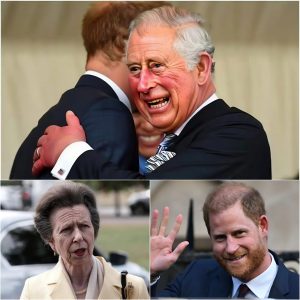
The return, in this imagined narrative, carried a quiet intensity rather than spectacle. There were no grand announcements or cheering crowds—only the subdued awareness among those present that something significant was unfolding. The palace, long a symbol of continuity and tradition, seemed to hold its breath as Harry entered its gates once again.
For nearly two years, his life had unfolded far from the rigid structure of royal duty. During that time, he had built a different routine, one shaped by personal priorities, family life, and independence from the expectations that once defined him. Walking back into Buckingham Palace meant stepping into a world he had consciously left behind, a world that still carried emotional weight.
Staff members, trained to maintain composure under any circumstance, acknowledged his presence with respectful restraint. Some had known him since childhood, watching him grow from a young prince into a figure navigating extraordinary pressures. Their greetings were polite, but beneath them lingered an unspoken recognition of the distance—both physical and emotional—that had separated them.
The corridors of the palace, lined with portraits of monarchs and moments frozen in time, seemed to reflect the gravity of his return. Each room held echoes of the past: formal ceremonies, private conversations, and pivotal decisions. For Harry, these spaces were not just historical—they were personal. Memories resurfaced with each step, blending nostalgia with uncertainty.
Family dynamics formed the quiet center of this moment. Re-entering the palace meant facing not just the institution, but the individuals within it. Relationships that had been strained or reshaped by time and circumstance now stood at a crossroads. The question was not only whether reconciliation was possible, but what form it might take.
In this imagined scene, any initial meeting is measured and careful. Words are chosen with precision, and silences carry as much meaning as speech. Years of shared history cannot be erased, but neither can recent tensions be ignored. The balance between honesty and restraint becomes essential, as each side navigates the delicate path forward.
Public perception, though distant from the palace walls, remains an invisible presence. Every movement, every interaction, has the potential to be interpreted and analyzed. Yet within the palace, the focus is more immediate: understanding, acknowledgment, and the possibility—however uncertain—of rebuilding trust.
Harry’s return also raises broader questions about identity and belonging. Having experienced life outside the royal framework, he brings back a perspective shaped by independence. This perspective may challenge established norms, but it also offers an opportunity for reflection within the institution itself. Change, even when uncomfortable, can open space for growth.
At the same time, the monarchy’s need for stability cannot be overlooked. Any shift in relationships or roles must be carefully managed to preserve continuity. Harry’s presence, therefore, is both personal and symbolic. It represents not just an individual’s return, but a moment of potential transition for the royal family.
As the day unfolds, the initial tension may begin to soften, replaced by cautious engagement. Small gestures—shared memories, brief conversations, moments of genuine connection—can carry significant meaning. They do not resolve everything, but they create openings where none existed before.
Ultimately, this imagined return is less about a dramatic reconciliation and more about the beginning of a process. It acknowledges the complexity of human relationships, especially when they exist under public scrutiny. There are no simple resolutions, only gradual steps toward understanding.
In the end, Harry’s walk back into Buckingham Palace is not just a physical act but a symbolic one. It marks a willingness to face the past, engage with the present, and consider the future. Whether it leads to lasting change or remains a moment of reflection depends on what follows—but the act itself carries undeniable significance.