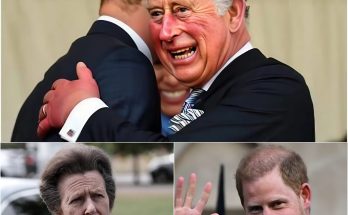
An unprecedented royal decree has been issued, sending shockwaves across the nation and beyond, as citizens, officials, and observers struggle to comprehend its meaning, its timing, and the far-reaching consequences it may carry for the monarchy, the government, and the people alike.

The announcement emerged without warning, delivered through official channels with a tone of unmistakable authority and urgency. In a system steeped in tradition and careful procedure, such a sudden declaration immediately drew attention. People paused their routines, media outlets shifted their focus, and conversations turned toward a single question: what does this mean?
A royal decree, by its nature, carries symbolic and sometimes legal significance, depending on the structure of governance. In modern constitutional monarchies, such actions are often guided by established frameworks, making anything described as “unprecedented” particularly striking. It suggests either a departure from tradition or the use of authority in a way not seen in recent history.
Speculation quickly spread. Some believed the decree addressed a national emergency, perhaps tied to security, economic instability, or a constitutional issue requiring immediate intervention. Others suggested it might relate to internal reforms within the monarchy itself—an attempt to modernize, streamline, or redefine roles in response to shifting public expectations.
Government officials responded cautiously. Statements emphasized stability and continuity, reassuring the public that institutions remained intact. Yet the careful wording of these responses hinted that even those within the system were navigating unfamiliar territory. Analysts and historians were brought into public discourse, offering context and comparisons, though few could point to a truly similar precedent.
Public reaction was varied. For some, the decree inspired confidence, reflecting decisive leadership at a critical moment. For others, it raised concerns about transparency and accountability. Social conversations, both online and offline, revealed a mixture of curiosity, skepticism, and cautious optimism. The lack of immediate clarity allowed interpretations to multiply.
International observers also took notice. In an interconnected world, actions taken by a monarchy can carry diplomatic implications. Allies and partners watched closely, assessing whether the decree signaled internal change or a shift in broader policy. Even symbolic gestures can influence perception, and perception often shapes reality in global relations.
Historians pointed out that moments like this, though rare, often become defining chapters in a nation’s story. Whether viewed as bold or controversial, such decisions tend to be revisited and reinterpreted over time. Their significance is not fixed in the moment but evolves as outcomes become clearer.
At the heart of the situation lies a tension between tradition and change. Monarchies are, by design, custodians of continuity. Yet they must also adapt to remain relevant. An unprecedented decree sits precisely at that intersection, embodying both the weight of history and the pressure of the present.
As details continue to emerge, the initial shock may give way to understanding. Policies will be examined, implications debated, and consequences measured. What began as a single announcement will unfold into a broader narrative involving institutions, individuals, and the public at large.
In the end, the true impact of the decree will depend not only on its content but on how it is implemented and received. History will judge whether it marked a necessary evolution or an avoidable disruption. For now, it remains a moment suspended between uncertainty and significance, capturing the attention of all who seek to understand its meaning.